Getting from first draft to beta readers
An extended, uninformed metaphor about car repair. And baking.

I finished my second draft of Ring of the Axe in April 2026, just in time to hand off to my beta readers for the month of May.
How do you turn a messy first draft into something that’s ready for beta readers?
Maybe it’s my motor city upbringing, but I’ve been thinking about car repair.
My process might look a little like restoring an old car. Not that I know the first thing about car repair. I don’t know much more than what Tim “The Tool Man” Taylor could teach about that…which is mostly grunting and running away from his problems in the garage.
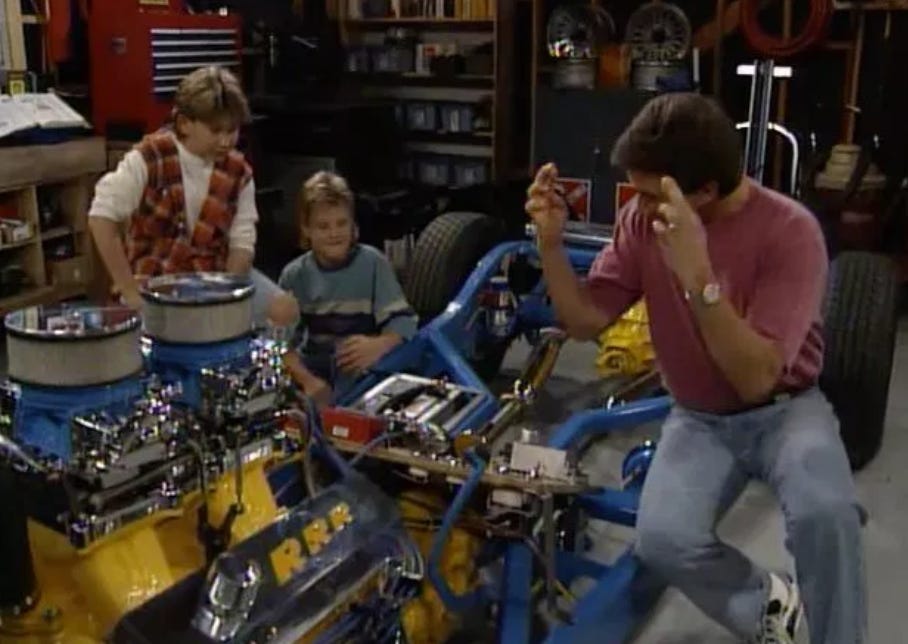
So, at the risk of extending this metaphor WAY too far...
The first draft is a clunker
My first draft is the old clunker. It doesn’t actually run. It’s rusted out on the bottom. Two of the doors don’t match the original body color. The trunk is held closed with duct tape. But you can sort of see what shape it’s in.
If you really listen, you can hear the purr of the engine.
To get her on the road, you gotta get that engine running.
Go piece by piece
I take out each component of my first draft and look at it on its own, like bringing the muffler out to the garage workbench.
Practically speaking, I can’t work in my full “manuscript” document. Maybe this is a limitation of the tool that I’m using - Google docs - which really starts to lag and drag in a document with over 500 pages. Scrivener or even Word are probably better behaved.
But no, I extract the section or chapter that I want to work on and pull it into another document called “ROTA Workbench.”
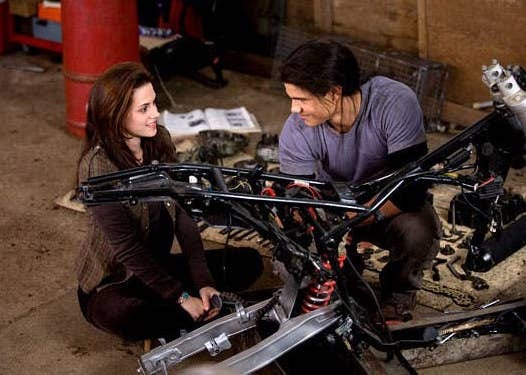
Repair or replace each part
Once I’m in that “Workbench” document, I get to work.
Being out of the main manuscript also does the trick of helping me take it not too seriously. It doesn’t have to be perfect - it’s not in the manuscript yet. We’re just tinkering. Fiddling around. Sometimes I look at the chapter and realize I can make some tweaks and put it right back in.
Sometimes I look inside and find that the carburetor was never the right fit for this car anyway, throw it in the scrap heap, and make a new one.
Rev that engine
After each piece is examined and tested, it’s time to turn the key and turn over the engine. Prove that it all works together, even if she still looks like a hunk of junk.
I copy/paste each piece back from the “Workbench” into the main manuscript. Do that enough times, and it’s all cleaned up there, ready to read.
And I have one more metaphor for you…
Fold it in
While I’m working chronologically section by section, piece by piece, I occasionally have a breakthrough…that changes everything that came before it.
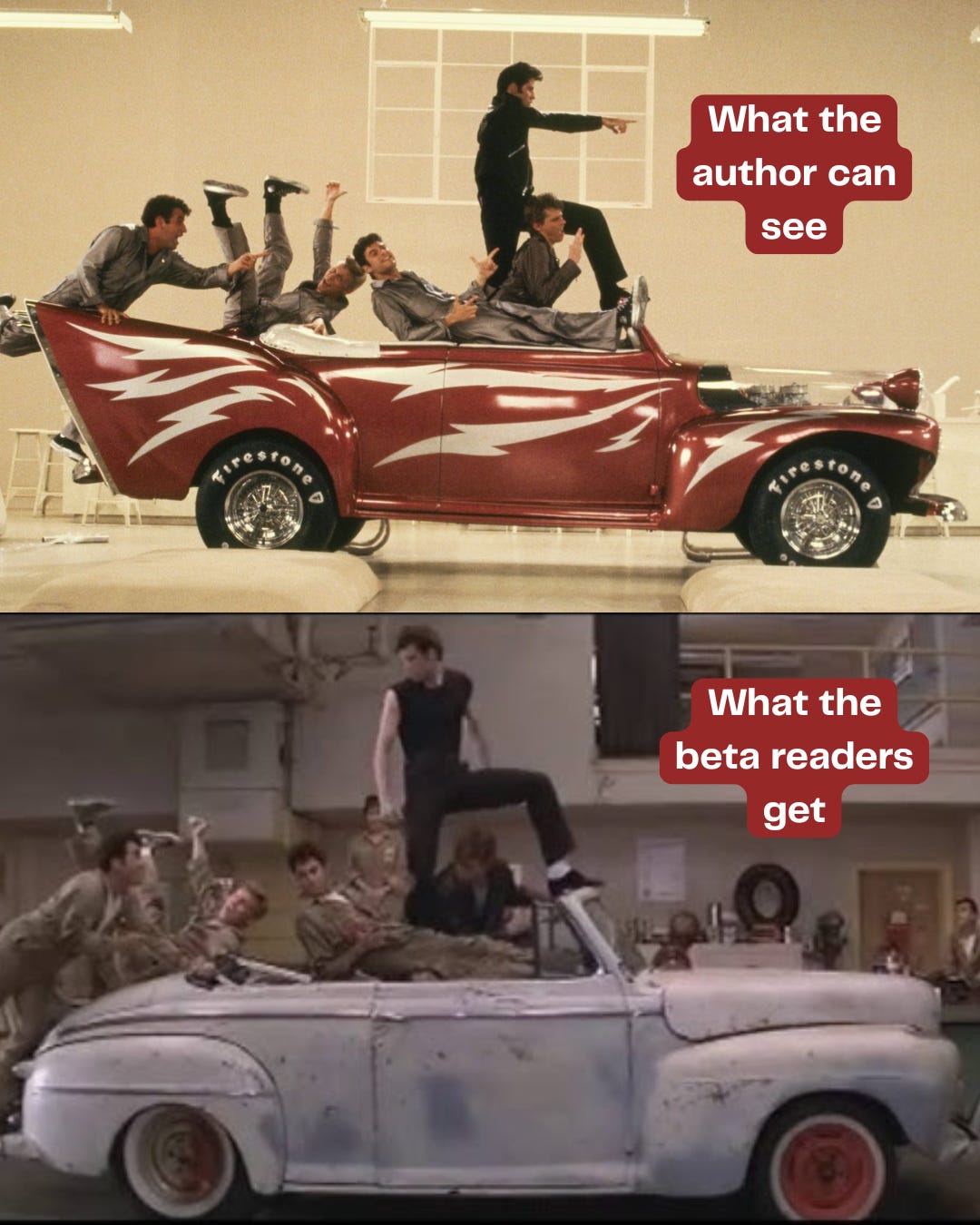
What do I start to hear when I write a scene or twist that requires me to go through and change a bunch of other things?
This:

This is officially known as retroactive continuity. And boy am I ret-conning to the max.
Some ret-cons are famously egregious. Like learning that it was Palpatine the whole time in Star Wars episode 9.
But my book is still a work in progress, and it’s all still fair game. If I can add foreshadowing and massage in a new idea or plot twist, then nobody (except my beta readers) will be any wiser!
Thus “fold it in” means going over and over it until it’s smooth and blended.
On to beta readers
And with that, page by page and ingredient by ingredient, my book is off to beta readers….
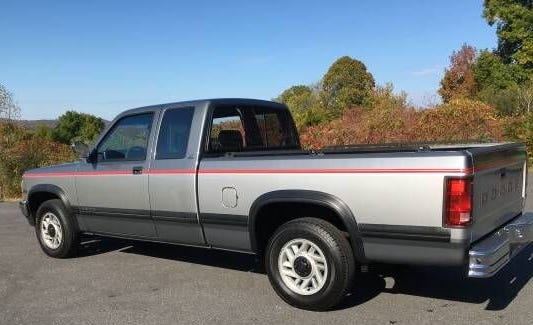
(Oh and if you’re curious, this was my first car…not this exact one, but same make, model, and fabulous paint job:)